Seamless, chemical-resistant floors for businesses that can't afford a long shutdown.
Call (972) 640-6524 for a Free EstimateTell us about your floor and we'll call you back the same working day.
Prefer to talk? Call (972) 640-6524
Commercial epoxy flooring in Irving protects busy concrete in warehouses, distribution centers near DFW Airport, auto shops, restaurant kitchens and retail spaces. A seamless coated floor is easier to clean, brighter under shop lights and holds up to forklifts, chemicals and constant foot traffic. We schedule around your hours to keep downtime short.
Commercial floors get heavier prep and thicker builds than a home garage. We grind with dust-controlled equipment, repair joints and spalled areas, then install a system chosen for your traffic: a high-build epoxy, a broadcast system with aggregate for grip, or a urethane cement for kitchens.
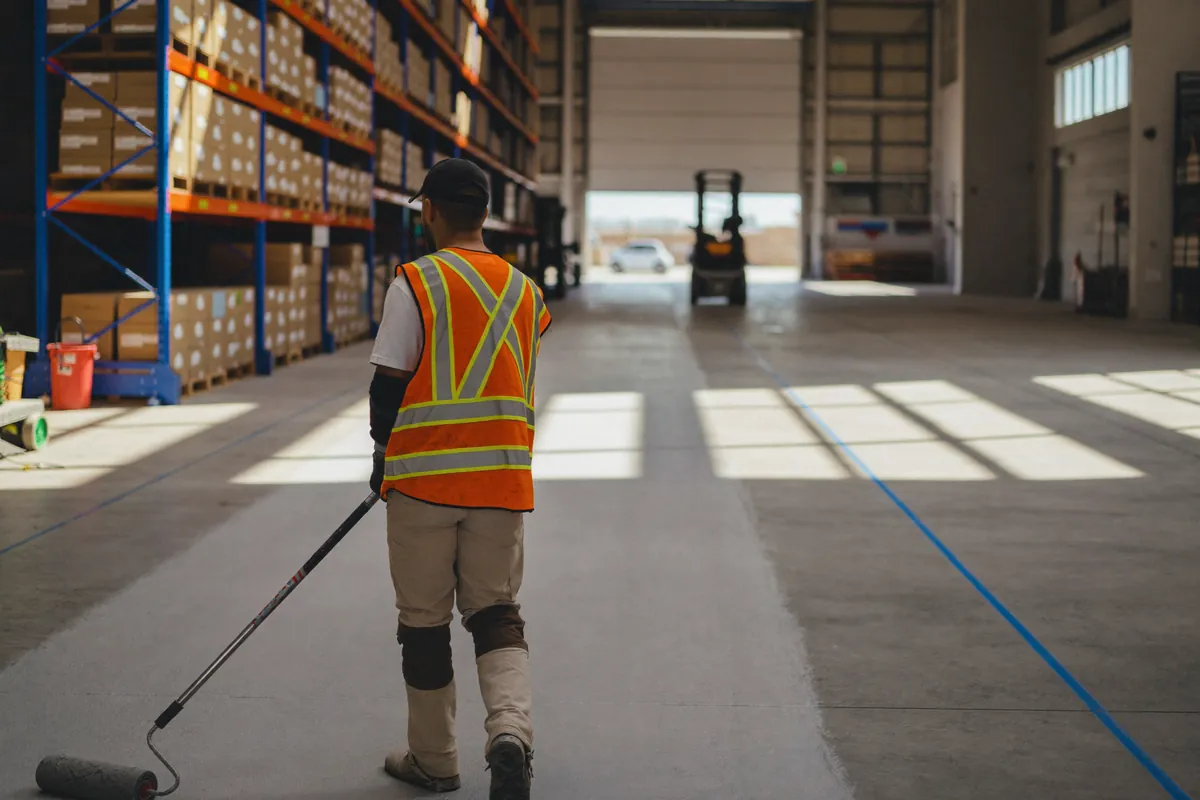
Safety lanes, walkways and parking lines can be striped right into the coating. Large areas are done in phases so part of the building stays open while the rest cures.
Businesses usually call us at one of these points:
Commercial concrete takes abuse from steel wheels, dropped tools, oils, cleaning chemicals and, in kitchens, hot water and grease every day. Bare concrete is porous, so it soaks up spills and slowly crumbles at the surface.
Older coatings fail when they were too thin for the traffic or went down over poorly prepared concrete. Matching the system to the use, and grinding properly first, is what makes a commercial floor last.
Square footage, the type of system and the condition of the slab drive most of the price. Heavy joint repair, old coatings that need removal and moisture issues all add prep time.
Scheduling matters too. Night, weekend or phased installs that keep you open take more planning. We'll walk the site, discuss your traffic and timeline, and give you a written proposal.
| High-build epoxy | Urethane cement | |
|---|---|---|
| Best for | Warehouses, shops, retail | Commercial kitchens, food processing |
| Heat and hot water | Good | Excellent; handles hot washdowns |
| Moisture tolerance | Needs a dry slab or primer | Very tolerant of damp slabs |
| Finish | Smooth or textured, many colors | Textured, matte, fewer colors |
| Cove base | Available | Standard in kitchens |
For warehouses, auto shops and showrooms, a high-build epoxy system is usually the right choice. Restaurant kitchens and food prep areas are better served by urethane cement, which stands up to hot water, grease and the smooth, easy-to-clean floor that health inspectors expect.
In most cases, yes. We can work nights and weekends or split the floor into phases so part of the space stays open. Fast-cure systems help shorten each phase.
Urethane cement is the usual choice. It handles hot water, grease and temperature swings, and it can be coved up the wall so floors are smooth and easy to clean, which inspectors look for.
Yes. Forklift lanes, walkways, hazard zones and parking stalls can be striped into the coating, so they don't wear off like painted lines.
It depends on traffic, but a properly built system on a well-prepared slab commonly lasts many years. The topcoat can be renewed as it wears, which keeps the base system protected.
Call Irving Epoxy Flooring at (972) 640-6524 or send the form at the top of this page. We'll come out, measure and give you a written quote.